
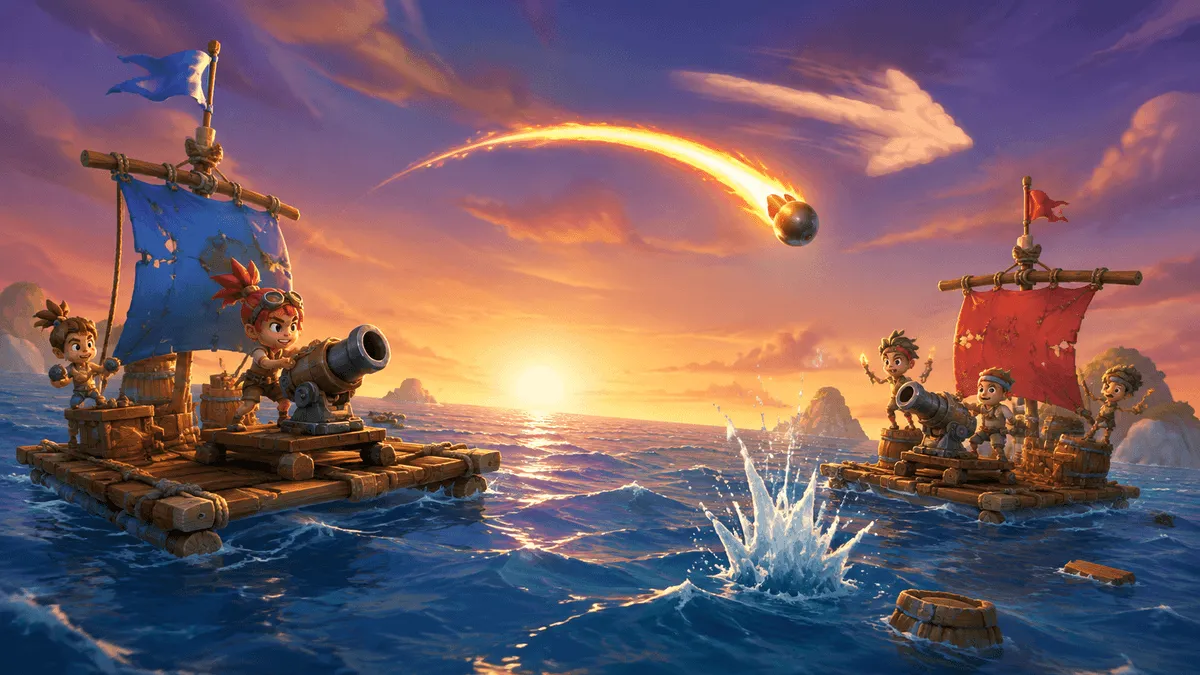
Raft Wars Aim Guide: Wind, Weapons and Upgrades
A useful Raft Wars aim guide starts with one simple idea: every shot gives you information. Raft Wars Multiplayer is a turn-based artillery game, so you do not need to guess wildly after a miss. Read the wind, remember where the last projectile landed, and make one controlled change to the next angle or power setting.
The goal is not merely to hit the opposing raft. A good shot can damage a rival, knock a character into the water, or create pressure that forces the other player to take a difficult return shot. Consistent calibration matters more than repeatedly choosing maximum power.
Quick takeaways
- Check wind direction and strength before every shot.
- Use the first safe attempt as a range test.
- Change either angle or power after a near miss, not both at once.
- Aim for exposed opponents when a direct hit is realistic.
- Choose upgrades that fix the weakness costing you battles.
On this page: aiming · wind · misses · weapons · upgrades · FAQ
Build a Repeatable Aiming Baseline
Begin by judging three visible relationships: the horizontal distance to the target, the height difference between the two rafts, and any obstacle that could interrupt the arc. Select an angle that clears the foreground, then apply enough power to reach the target area. Treat that attempt as a baseline even if it misses.
On the next turn, compare the landing point with the target. A projectile that falls short usually needs more power or a flatter route. A shot that passes beyond the opponent needs less power or a steeper arc. When the trajectory clips part of your own raft or another nearby object, increase the launch angle before worrying about distance.
This method makes Raft Wars aiming repeatable. Random changes can occasionally land a spectacular hit, but they do not teach you which adjustment worked.
Correct Your Shot for Wind
Wind changes a projectile while it is in the air. A following wind pushes the shot farther in its direction; a headwind resists the flight. Stronger wind generally demands a larger correction, while a short, direct arc gives the wind less time to act than a high, slow arc.
Check the indicator again at the start of the turn because the conditions can change. If the wind pushes toward the target, begin with slightly less power than the same shot would need in calm conditions. If it pushes back toward your raft, add power carefully or choose a trajectory that spends less time in flight.
Do not copy the previous setting without checking the new wind. The distance may be the same, but the correct Raft Wars wind adjustment may not be.
Turn Each Miss Into a Better Shot
The fastest way to calibrate is to isolate one variable. Keep the angle steady and change power when the arc is safe but the distance is wrong. Keep the power close to the previous value and change the angle when an obstacle blocks the route.
Use the size of the miss to decide the size of the correction:
- Make a small adjustment when the projectile lands near the target.
- Make a larger change when it falls into the water well before the opposing raft.
- Rebuild the shot when it collides with a close obstacle or takes an unusable path.
- Recheck the wind before applying anything learned from the previous turn.
This also prevents overcorrection. Alternating between far too short and far too long gives an opponent several free chances to establish accurate range.
Choose a Weapon for the Current Shot
Raft Wars Multiplayer includes different projectile and weapon options, including familiar tennis-ball shots and stronger choices such as rockets. The best option depends on the target and the information you already have.
Use a basic, predictable projectile when you are still measuring range. Once the arc is calibrated, a stronger weapon has a better chance of producing useful damage instead of being wasted on the ocean. If an exposed opponent can be knocked into the water, prioritize the accurate line rather than choosing a weapon only because it appears more powerful.
Think about availability as well. A limited or more valuable weapon should solve a specific problem: finishing a vulnerable rival, punishing a clustered position, or converting a well-tested trajectory into a decisive hit.
Set Practical Upgrade Priorities
Rewards can improve weapons and the raft between battles. There is no single upgrade order that fits every match, so use recent losses as evidence.
- Improve survivability when opponents regularly remove your team before you can establish accurate range.
- Improve offensive options when your shots connect but do not create enough pressure.
- Expand flexibility when you lack a suitable response to protected or awkward targets.
- Avoid spreading resources across upgrades that do not change the situations you are losing.
An upgrade is useful when it creates an extra turn, a more reliable hit, or a better response to the opponent's position. It should support your aiming decisions rather than replace them.
Put the Routine Into Practice
Before firing, use the same sequence: identify an exposed target, check wind, choose an arc, set power, and predict the landing area. After the shot, remember whether it was short, long, blocked, or pushed sideways. That short review turns the next turn into a calculated correction.
You can play Raft Wars online on EaseGame and apply the routine from the opening shot. The playable page is the Raft Wars Multiplayer version, so the guide focuses on its PvP aiming, wind, weapons, and upgrades rather than the older single-player storyline.
Frequently Asked Questions
How do you aim better in Raft Wars Multiplayer?
Use one shot to establish a baseline, note where it lands, and adjust one variable at a time. Change power when distance is wrong and angle when the route is blocked, while checking wind before every attempt.
How does wind work in Raft Wars?
Wind pushes a projectile during flight. Its direction tells you which way the shot will drift, and stronger wind calls for a larger correction. High arcs remain airborne longer and can be affected more than short, direct shots.
Should you change angle or power after a miss?
Change power if the projectile follows a clear route but lands short or long. Change the angle if the shot strikes an obstacle or needs a different arc. Keeping one setting stable makes the result easier to understand.
Which Raft Wars upgrade should you buy first?
Choose the upgrade that addresses the reason you are losing. Raft improvements help when survival is the problem, while weapon improvements are more useful when accurate hits are not creating enough pressure.
Conclusion
Reliable Raft Wars Multiplayer play comes from observation, not guesswork. Read the wind, establish range with a controlled shot, correct one setting at a time, and spend upgrades on a clear weakness. A disciplined aiming routine makes every turn more informative and every valuable weapon easier to use well.
August 24,2026