
Brotato Beginner Guide: Survive Your First Runs
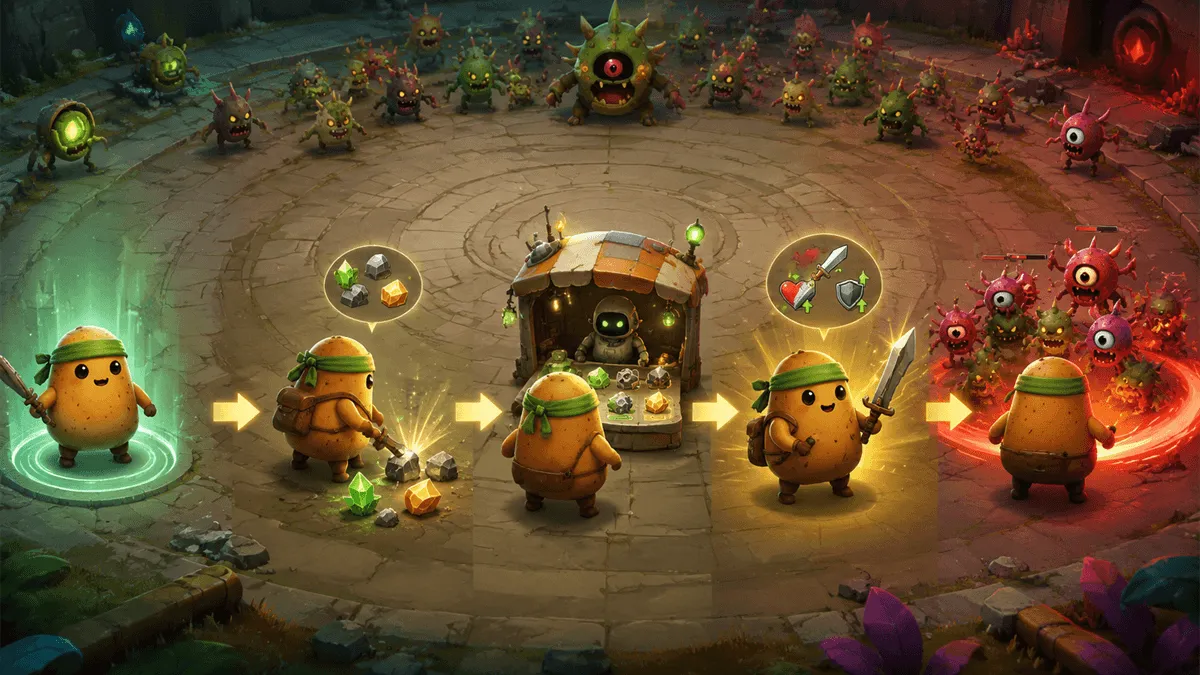
This Brotato beginner guide explains the complete run loop: survive a timed alien wave, collect materials and experience, choose upgrades, shop for weapons and items, then repeat against a stronger horde. The weapons fire automatically by default, so beginners should focus first on movement, positioning, pickups, and shop decisions.
How to Play Brotato
Move around the arena and create open paths before enemies surround the character. Materials dropped by defeated enemies fund the shop, while experience contributes to level-up choices. At the end of a wave, compare upgrades with the current character and weapon plan instead of selecting the highest-looking number.
The game supports up to six weapons. Filling those slots gives the build more ways to control the arena, but weapons that share useful tags or scaling stats are easier to improve together.
Movement During Alien Waves
Avoid making a tight circle around the same small area. That pattern can pull the horde into a dense wall. Use wider paths, change direction before the route closes, and move through gaps while they are still open.
Materials do not justify every risk. A pickup near a large enemy group can be collected later in the wave if the path becomes safer. Movement Speed is valuable because it improves both survival and the ability to collect drops.
Using the Shop
The shop is where a run gains direction. Prioritize core weapons, upgrades that scale their damage, and stats that fix immediate weaknesses. Lock an important item when it is useful but unaffordable, then decide whether it remains valuable after the next wave.
Rerolling can find better choices, but every reroll spends resources that could buy an upgrade. Stop rerolling when the current shop already offers a meaningful improvement.
Beginner Stats Explained
| Stat group | Why it matters |
|---|---|
| Damage and weapon scaling | Helps clear enemies before the arena becomes crowded |
| Attack Speed | Increases attack frequency for compatible weapons |
| Movement Speed | Creates safer routes and improves pickup collection |
| Max HP and Armor | Increase the margin for surviving mistakes |
| Dodge | Adds a chance to avoid incoming hits |
| Recovery | Restores health through regeneration or other effects |
| Harvesting and Luck | Support economy, item quality, and pickups over time |
Do not raise every stat equally. Pick a damage plan, then support it with movement and defense. Economy is useful when the build can already clear the current wave.
Five Brotato Tips for New Players
- Keep moving, but do not move predictably into a closing group.
- Build around the character's bonuses rather than ignoring them.
- Use compatible weapons so fewer stats need to be upgraded.
- Buy enough defense and speed before later waves punish the weakness.
- Review why a run ended: damage, movement, defense, or economy.
Start a run on the Brotato game page, then use the separate Brotato builds guide when you are ready to plan a focused loadout.
Frequently Asked Questions
How many waves are in a standard Brotato run?
A standard Brotato run is built around surviving 20 waves. Wave length and enemy pressure change during the run, with later waves demanding a more complete mix of damage, movement, and defense.
Are Brotato weapons automatic?
Weapons fire automatically by default, which lets the player concentrate on movement and positioning. Manual aiming is also available in supported versions for players who want more direct targeting control.
What should a beginner buy first?
Prioritize weapons that fit the character, then buy the main damage scaling and enough movement or defense to survive. Avoid spending all materials on rerolls while useful upgrades are already available.
August 20,2026