

Beyond the Click: A Deep Dive into the Ethics and Design of BLOODMONEY!
Would you hurt an innocent person if it meant you could survive? This is the uneasy question at the heart of BLOODMONEY!, a clicker game that hides something darker beneath its cute surface. You play as someone desperate to earn $25,000, and Harvey, a mysterious figure, offers you a strange way to make fast cash. Each tap feels harmless at first, but the more you play, the more you notice how every click might lead to someone else’s pain. The contrast between the soft visuals and the heavy choices creates tension that keeps players thinking long after they stop. BLOODMONEY! is not just another clicker game. It is a small but powerful psychological experiment about choices, rewards, and responsibility.
What Is BLOODMONEY!
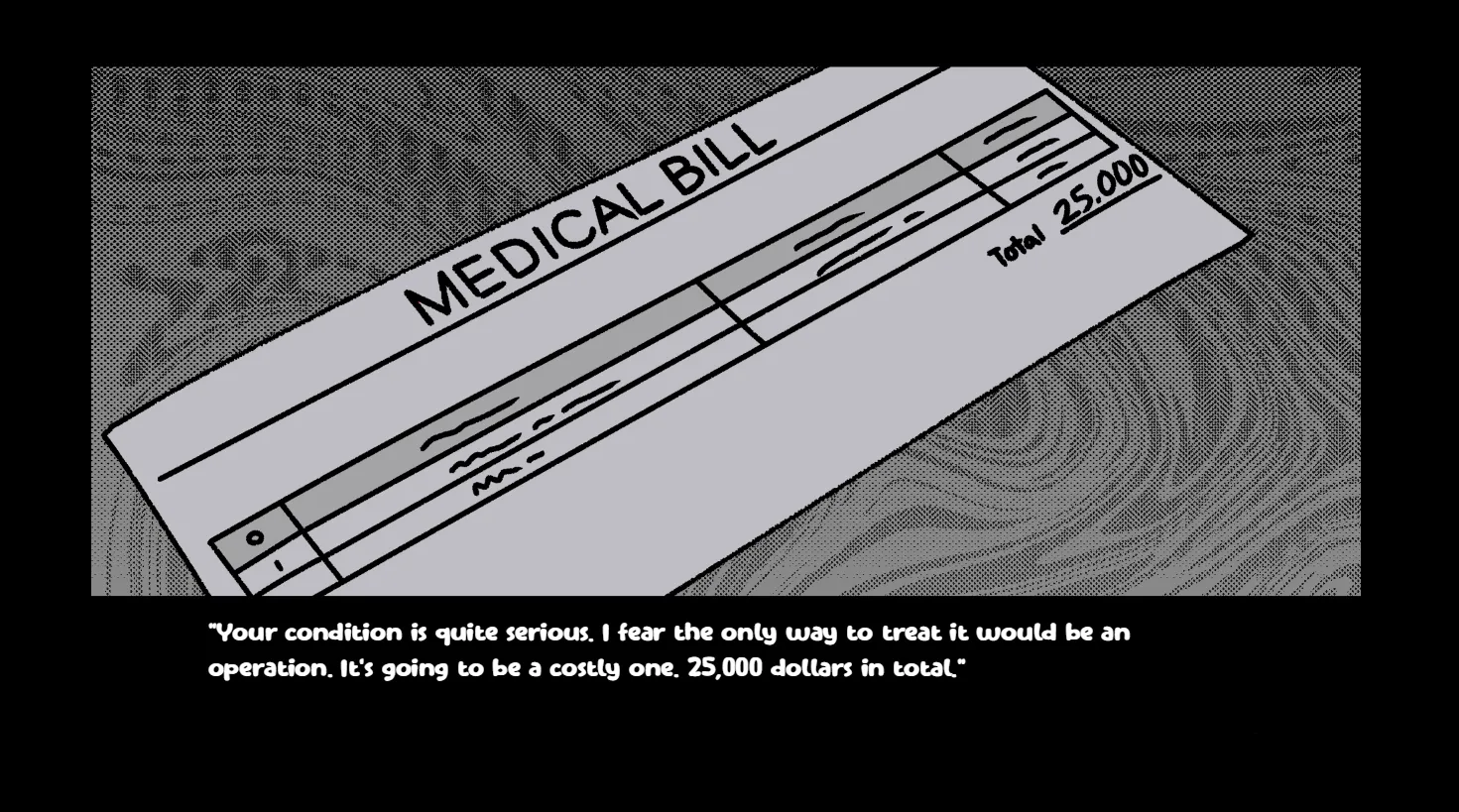
BLOODMONEY! is a small but striking indie clicker created by developer ShroomyChrist (released August 3, 2025). It runs directly in your browser, loads fast, and delivers a complete experience in about twenty to thirty minutes. The goal is simple on the surface: earn enough money to pay for a life-saving surgery. To do this, you interact with Harvey, the roadside vendor who runs the game’s strange little business and offers cash in the easiest way possible. Every click gives you a single dollar, and this clear rule shapes the entire game loop.
What surprises most players is how the bright pink visuals and clean UI hide something far heavier underneath. The game feels charming at first, almost harmless, but the tension rises the longer you stay with Harvey. His reactions shift, the atmosphere changes, and the clicking no longer feels like “just clicking.” By the time you reach the final stretch, BLOODMONEY! reveals itself not only as a casual browser game but also as a clever commentary on pressure, rewards, and the cost of easy money.
Gameplay Breakdown — Simple Mechanics With Heavy Consequences
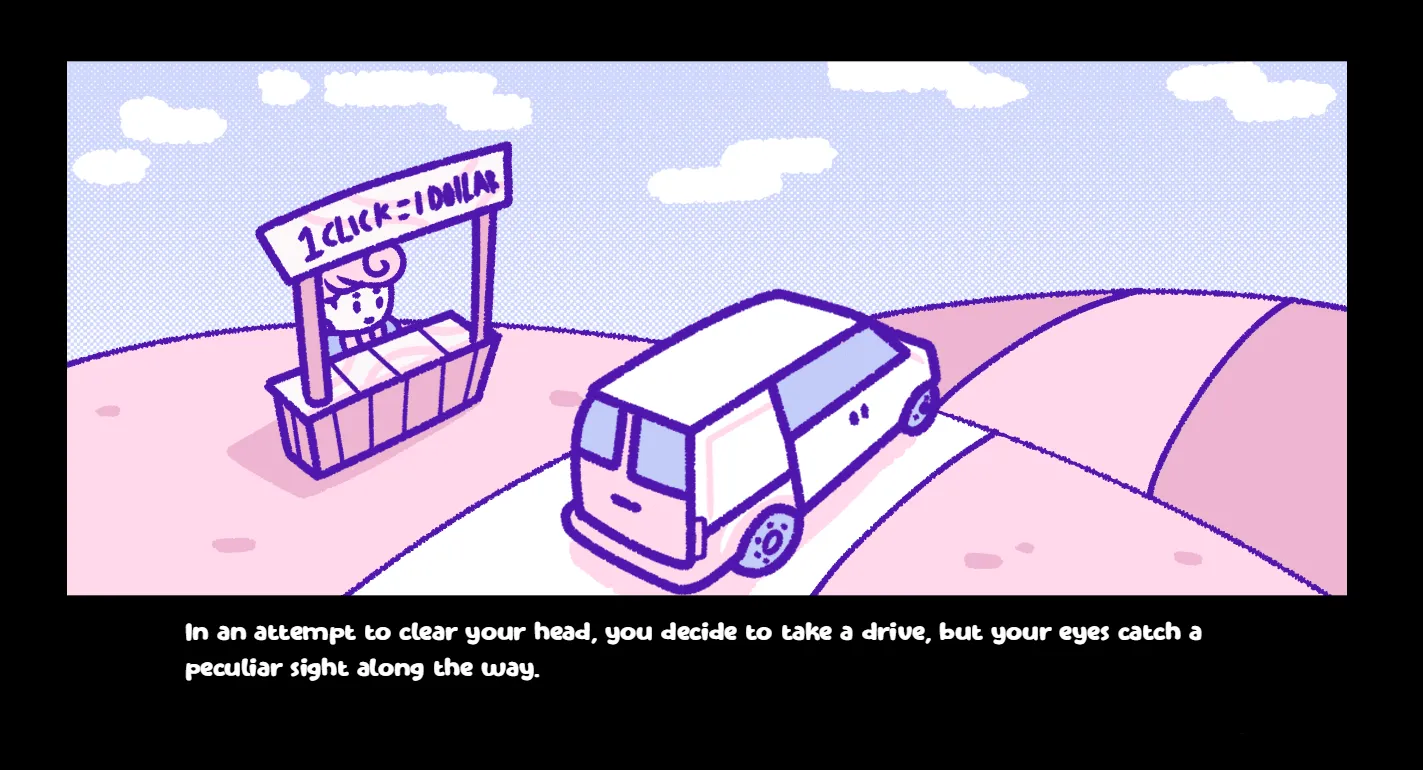
At the heart of BLOODMONEY! is a simple rule: every click gives you one dollar. It feels light and fast at the start, almost like any casual clicker game. But as the number rises, so does the feeling that your progress comes at a cost. The rhythm stays easy, but the weight behind each click slowly grows, turning a basic action into a tense part of the experience.
To speed things up, you can buy tools that increase your income. The early ones look harmless, but later options become shockingly violent. These upgrades offer the tempting “more damage, more money” loop common in many clicker games, but here they also add visual and emotional pressure. The stronger the tool, the more uncomfortable the screen feels.
The core loop is simple: click, earn, buy better tools, earn even faster, repeat. It mirrors many browser clicker games. But here, each upgrade adds tension instead of comfort. Each improvement brings stronger feedback, higher income, and a deeper sense of harm. The game keeps pulling you forward, making you question how far you are willing to go.
The Contrast that Defines BLOODMONEY!
One of the most striking parts of BLOODMONEY! is the way it mixes soft, pastel visuals with actions that grow darker over time. The game looks almost comforting at first. The colors are gentle, the shapes are round, and the whole scene feels clean and plush-like, almost like something from a cozy mobile game. This friendly style makes the clicker experience feel safe when you first step in.
But as you continue playing, the gap between how the game looks and what you are actually doing becomes impossible to ignore. Your actions escalate, the tools become harsher, and the tone shifts even though the screen stays cute. This strong contrast creates a sharp emotional drop, making each choice feel heavier than it should in a simple clicker game.
Some players call this effect a kind of “visual trick.” The art invites you in with charm, then quietly reveals the true weight of your actions. Instead of classic horror, BLOODMONEY! delivers a softer, more surprising kind of fear that comes from realizing you were guided into something uncomfortable by a world that looked harmless.
Themes — Morality, Survival, and the Price of a Choice

Survival vs Humanity
The central theme of the game begins with a sharp question: if your life were truly at risk, how much of your humanity would you give up? At first, the game feels like a normal clicker: you tap a few times, earn some money, and move on. But as the pressure builds and the stakes rise, you begin to ask yourself harder questions. Should you use tools? Should you try to earn money faster? And what exactly are you sacrificing when you make those choices? The simple act of tapping quietly transforms into a moment of moral tension, widening the gap between survival and humanity.
Agency and Guilt
What makes the experience even more powerful is that BLOODMONEY! never forces you into violence. The game doesn’t guide you, push you, or make decisions for you. Every action comes from the player alone. This design creates a unique emotional effect often described as “player guilt.” Many players eventually realize: the game didn’t tell them to hurt anyone, they chose to do it. That uncomfortable moment of self-awareness becomes part of its psychological impact. Instead of jump scares, the game confronts you with quieter, more personal questions such as: Why did I do that? What does this say about me? This layer of agency sets it apart from typical moral-choice or browser horror games.
A Commentary on Clicker Games
BLOODMONEY! also acts as a clever commentary on clicker games as a whole. While most clickers reward you with bigger numbers and faster progress, this game flips the formula. The quicker you tap, the more anxious you feel. The more money you earn, the heavier the emotional pressure grows. Every click becomes a small reminder asking whether you want to continue. It removes the usual power fantasy and replaces it with a meta reflection on the cost of efficiency. This contrast gives the game a surprising level of depth for such a small project, making it one of the few short clicker experiences that stays with players long after the final tap.
Diverse Endings — A Game You Replay to Question Yourself
BLOODMONEY! uses a branching ending system, where your choices, the tools you pick, and the consequences you create all lead you toward different story paths. Whether you reach a merciful, neutral, or much darker ending, each outcome reinforces the game’s core theme: what did your actions really mean, and how did you end up here? We will avoid spoilers in this blog, but it’s safe to say that every ending pushes you to pause and think about the decisions you made.
These diverse endings also give the game a surprising amount of replay value. Many players finish their first run only to ask new questions. What if they tried to hurt Harvey as little as possible? What if they went completely out of control instead? This mix of curiosity and self-reflection makes a very simple clicker game unexpectedly engaging. You’ll likely want to jump back in, explore different choices, and see whether each path reveals something new about the story or yourself.
Final Thoughts
Even though BLOODMONEY! is a small game with a short playtime, it leaves a surprisingly strong emotional impact. It shows that even the simplest clicking mechanic can still tell a complex story filled with tension, meaning, and moral questions. This kind of light but deeply reflective design is rare in the indie scene, and it is exactly what makes the game stand out.
Whether you see it as a twist on the clicker formula or an emotional experiment wrapped inside an indie project, the game manages to break past genre limits. In just twenty to thirty minutes, it guides players through a journey that moves from casual fun to discomfort, and from curiosity to real reflection.
In the end, the question it throws back at you might be the most important one: What would you give up for twenty-five thousand dollars?
November 26,2025